Equipment, readings, then dry

Structural Drying and Dehumidification in Alpharetta, GA

After water is out, moisture still sits inside floors, studs and drywall. The drying team in Alpharetta uses air movers, dehumidifiers and daily readings to bring the structure back to dry, whatever the humid air does outside.

(888) 532-4616Water gone but walls still damp? Start drying
Air movers placed by readings Dehumidifiers sized to the space Daily moisture checks
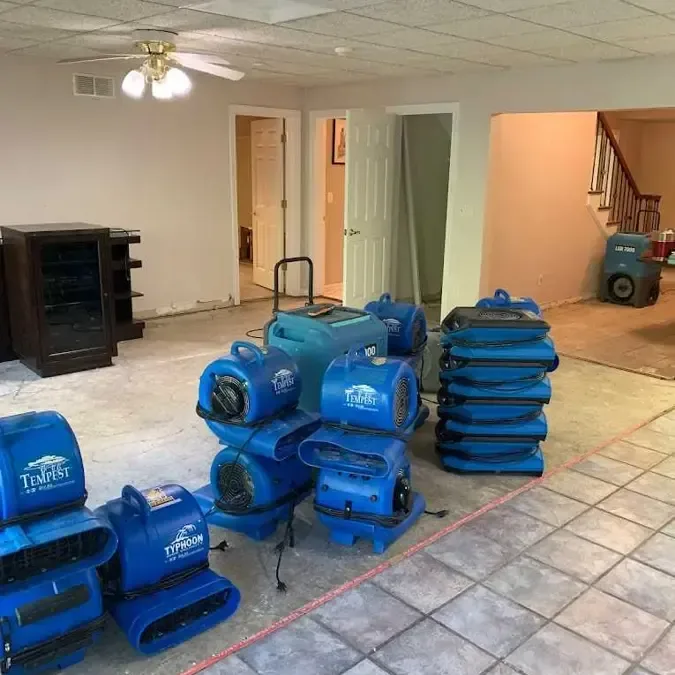
Blue air movers and dehumidifiers stacked on a floor, structural drying for Alpharetta
EquipmentAir movers, dehumidifiers
Measured byDaily moisture readings
Done whenDry standard is met
Not forGuesswork
Right now

First steps for structural drying and dehumidification in Alpharetta

  1. 1

    Map the moisture

    A meter and thermal camera show how far the water went.

  2. 2

    Set the equipment

    Air movers and dehumidifiers go where the readings call for them.

  3. 3

    Close up the space

    Keep windows shut and the equipment running.

  4. 4

    Check every day

    Readings steer changes until the structure is dry.

How the work is held to standard

How structural drying and dehumidification is handled in Alpharetta

Dispatch at any hour

Active water is treated as urgent around the clock, nights, weekends and holidays included, because a split pipe keeps running.

IICRC S500 structural drying

The drying team dries framing, subfloor and concrete, not only the surface, and checks every wet material with meters each day.

A claim-ready file

Moisture maps, daily psychrometric logs and timestamped photos taken before demolition go into the file your insurer reviews.

Basements, crawl spaces, attics

A finished lower level, a dirt crawl space and an attic air handler each dry differently, so the plan starts where the water went.

Typical cost ranges

What does structural drying and dehumidification cost in Alpharetta, GA?

Structural drying typically runs $1,500 to $16,000 or more. One or two rooms cost the least, while a whole floor with a heavy Class 4 load or hardwood needs the most equipment and time, and humid weather outside can stretch the job.

One or two rooms$1,500 to $4,000
  • Equipment in two rooms
  • Daily readings
  • Short drying period
Several rooms or a level$4,000 to $9,000
  • Several rooms dried
  • Walls opened as needed
  • Equipment adjusted daily
Whole floor, Class 4$9,000 to $16,000+
  • Whole floor dried
  • Specialty drying used
  • Extended monitoring

Ranges are typical, not a quote: the water category, the square footage that got wet, the material class and how fast drying started move the number most. For a closer planning range, run the water damage cost calculator.

The dry-out, milepost by milepost

The structural drying and dehumidification process, start to dry

Equipment stays until the readings say dry, not until the room looks dry.

  1. MP 1

    Map

    Wet areas found with meters.

  2. MP 2

    Place

    Equipment set where it is needed.

  3. MP 3

    Monitor

    Readings taken each day.

  4. MP 4

    Finish

    Equipment removed once dry.

Humid air is part of the problem

Alpharetta has a humid subtropical climate with precipitation on about 103 days a year, so outdoor air often carries a lot of moisture. Opening windows to dry a house can bring more water in. Dehumidifiers pull moisture out of the closed space, and air movers push dry air across wet surfaces.

How the equipment is placed

The crew maps wet areas with a moisture meter and a thermal camera, then sets air movers across floors and walls and dehumidifiers in the affected rooms. Wet cavities may be drilled or opened so air can reach them. Equipment is adjusted each day as readings come down.

Knowing when it is dry

The crew records readings daily and compares them to unaffected materials. Drying ends when the structure reaches a dry standard, not when it merely feels dry, which keeps mold from starting inside a wall. The same process follows water extraction and applies to crawl space jobs.
Questions

Structural Drying and Dehumidification questions in Alpharetta, GA

How long does structural drying take?

Most jobs take a few days, and a Class 4 loss or a thick material such as hardwood takes longer. Readings decide the finish, not a calendar.

Why do dehumidifiers run so loud?

Commercial equipment moves a lot of air and pulls a lot of water. The noise is a sign the equipment is working, and it falls once the structure is dry.

Can I open windows to speed up drying?

Usually not. Humid outdoor air slows the process, so the space is kept closed while dehumidifiers run.

What do the daily readings show?

They show whether moisture in each material is falling toward a normal level. If a reading stalls, the crew changes the equipment placement.

Will drying prevent mold?

Drying promptly and fully removes the damp conditions mold needs. Skipping it, or stopping early, lets moisture sit inside walls.

Can electricity bills rise during drying?

Yes, because the equipment runs around the clock. The cost is usually part of the insurance claim, so keep records of the run time.

Still not sure what is wet? Water cleaned up but the walls still feel damp?

(888) 532-4616Ask how the drying equipment is set
Service area

Structural drying and dehumidification across Alpharetta and nearby communities

Alpharetta, GA service area

The drying team works across ZIP 30004, 30005, 30009 and 30022, in houses near Windward Parkway and Haynes Bridge Road as well as apartments and offices around Avalon and North Point.

The same service nearby: structural drying and dehumidification in Peachtree Corners, Roswell, Milton.

Water damage restoration in Alpharetta · every town covered

Emergency water removal

Dry the structure to the studs

Moisture left in framing and subfloor keeps causing damage. The drying team uses readings to bring everything back to dry, then removes the equipment.

(888) 532-4616Book the drying equipment
(888) 532-4616 water still spreading?