Truck-mounted, portable and submersible
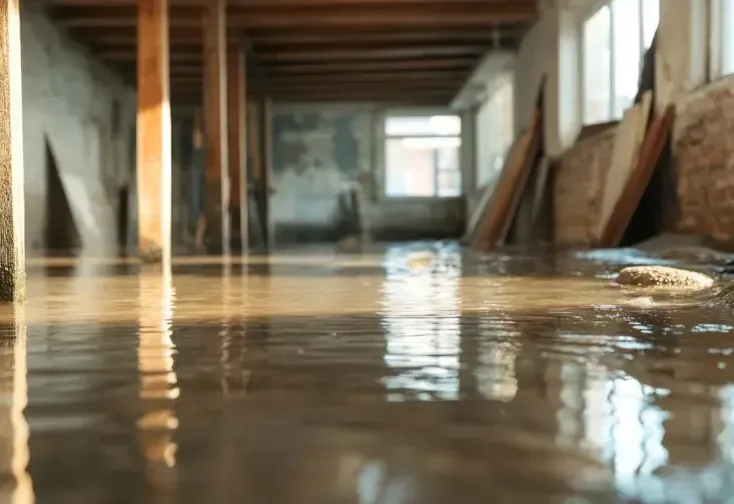
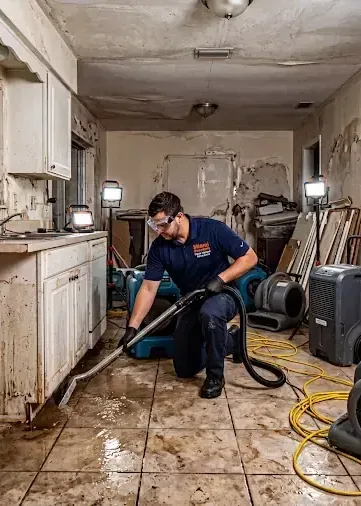
A truck-mounted unit parked at the curb gives the strongest suction and sends the water to the truck instead of a drain inside the house. In townhomes and upstairs rooms the hoses cannot reach, portable extractors do the same work. Where water stands deep in a lower level, a submersible pump goes in first and the extractors follow.
Carpet, pad and hardwood floors
Weighted extraction tools stand on the carpet and squeeze water out of the pad underneath, which a hand wand cannot do. Pad soaked with clean water can sometimes be dried in place; pad touched by sewage or creek water comes out. Hardwood gets a floor drying mat system that pulls water up through the boards before they cup.
What happens right after extraction
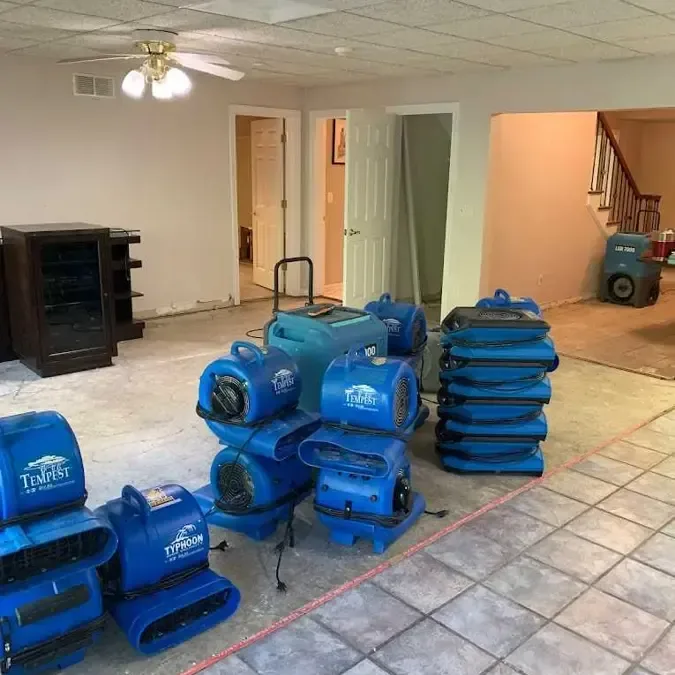
Once the floor stops giving up water, thermal imaging and pinless meters show where it traveled under baseboards and into wall cavities. That map decides where air movers and LGR dehumidifiers go. The drying side is covered under structural drying. For water-saving fixtures, see EPA WaterSense, and for flood safety, Ready.gov on floods.