What makes sewage cleanup different
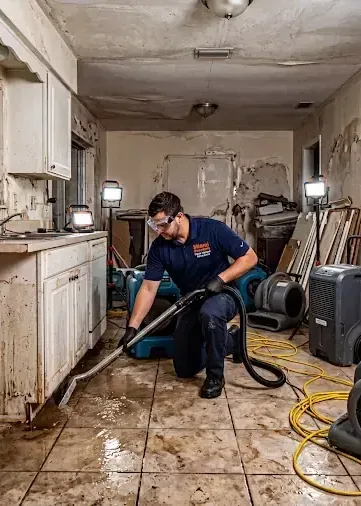
- PPE for everyone in the work area: gloves, eye protection, respirators and protective suits
- Containment with plastic sheeting and negative air through HEPA air scrubbers
- Porous materials the sewage touched come out: carpet, pad, drywall above the waterline, insulation
- Hard surfaces cleaned, then treated with an EPA-registered antimicrobial left on for its full dwell time
Why backups happen in older neighborhoods
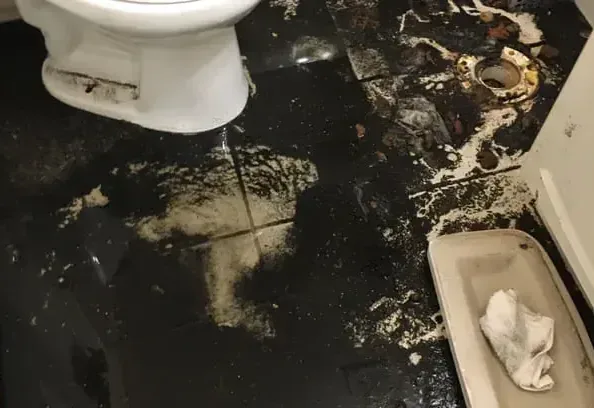
Homes from the 1970s often still have their original building drain and sewer lateral, the private pipe from the house to the public main. Roots work into joints, grease narrows the pipe, and a heavy storm can push water back up from a stressed main. A plumber clears or camera-inspects the pipe so the backup does not repeat.
Drying after the removal
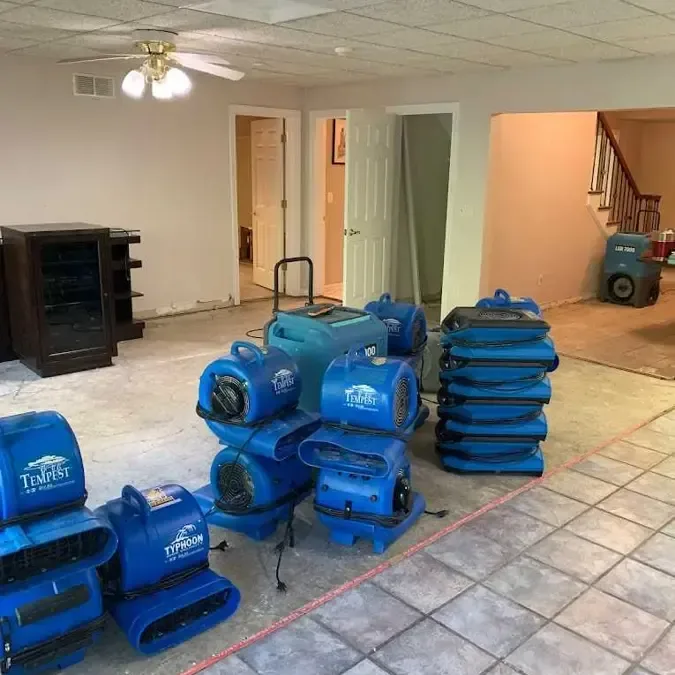
Only after contaminated materials are out and surfaces are treated does drying start. Air movers and LGR dehumidifiers run inside the containment, and readings are logged daily. Worker safety around contaminated water is covered by OSHA flood cleanup, and the EPA explains sanitary sewer overflows.