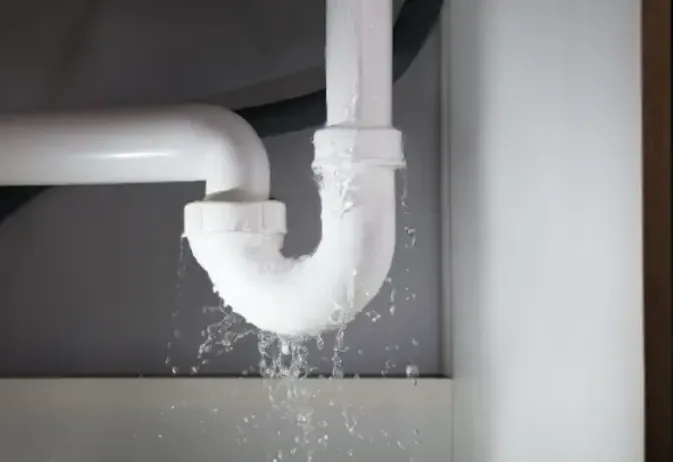
Roswell has condos, townhomes and apartment complexes such as Lake House at Martin's Landing, and in each of them a leaking appliance can reach the ceiling below or the wall next door. The water leaves the room it started in far faster than most households expect.
Key takeaways
- In attached homes a washer, dishwasher or ice maker leak often reaches the unit below or beside before it is noticed.
- Shutting the appliance's supply valve and telling the neighbor are the first two steps.
- The drying team follows water into cabinets, subfloor, shared walls and the ceiling below, not only the visible wet floor.
- Who is responsible depends on the association documents and the policies involved, so keep records from the first minute.
- Replacing old supply hoses and knowing where each shutoff is cuts the odds of a repeat.
Why attached homes spread the problem
Roswell counted 38,032 housing units in the 2020 census, and they range from Martin's Landing homes dating to the 1970s and 1980s to the newer infill townhomes and condos of Historic Roswell. The 2024 American Community Survey counts 35,441 households.
In an attached home, floors and walls are shared. Water that slips under a laundry closet door can reach a subfloor, then a ceiling cavity, then a neighbor's living room.
Martin's Landing has lakes, pools, tennis courts and paths, and Historic Roswell mixes preserved 19th century homes, Craftsman bungalows and infill. The plumbing behind those walls varies as much as the exteriors, so local Roswell water damage restoration crews check each loss on its own.
Where appliance leaks come from
Most appliance leaks start at a connection and not in the machine itself. Hoses age, clamps loosen and drain connections slip.
A leak at the back of a washer can run for days behind a closed closet door. A dishwasher leak can seep into the cabinet base and the floor under it long before a puddle appears.
Older buildings add another layer, since valves that have not been turned in years can stick or weep when they are finally used. A quick turn of each shutoff once a year keeps them working.
- Washer supply hoses and the drain hose behind the machine
- Dishwasher supply and drain connections under the sink
- Ice maker and refrigerator water supply tubes
- Toilet supply connections and shutoff valves
- Water heater drain pans and the pipes leading from them
Signs of a leak from the unit below
A household underneath may notice trouble before the household above does. The signs show up slowly at first and then all at once.
Anything that grows or darkens over a day or two is worth reporting right away, even if the cause is not clear.
A moisture meter can find water that has not yet stained anything. That early catch often keeps a ceiling from needing replacement.
- A ceiling stain or a damp patch that spreads
- Paint that bubbles or drips on a ceiling or a shared wall
- A light fixture that fills with water or flickers
- A musty smell that appears after the neighbor's laundry day
First steps for both units
The first steps differ between the unit with the leak and the unit below. Both households have a part to play.
In the unit with the leak
Close the supply valve to the appliance or the main for the unit, and unplug the machine only if the floor around the outlet is dry. Then lift towels and rugs so water is not trapped against the floor.
- Photograph the hose, the floor and the wet cabinet bases
- Tell the neighbor below and the association manager
- Bring in extraction before the floor finish starts to lift
In the unit below
Move furniture and electronics out from under a stained ceiling and set containers under active drips. A ceiling that bulges should be left alone so it can be opened safely.
- Photograph the stain and mark its edge with a pencil so growth is visible
- Tell the neighbor above and the association manager
- Keep light fixtures off until the ceiling has been checked
How the drying team follows the water
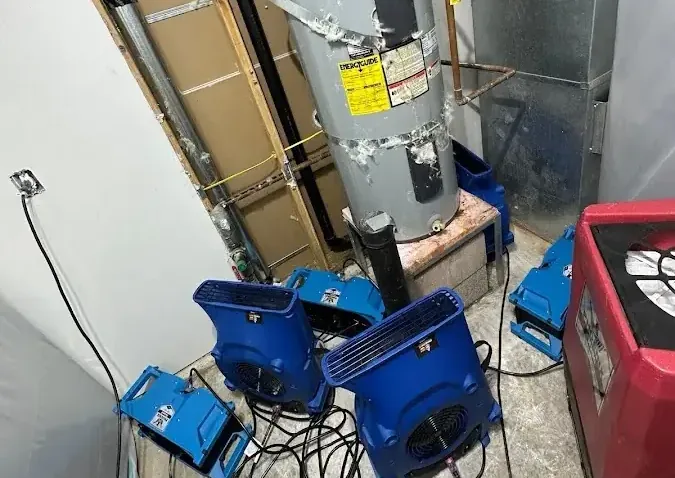
Water does not stop at a visible edge. Moisture meters and a thermal camera show the path through cabinets, the subfloor, the wall base and the ceiling cavity below.
An appliance leak water damage job starts with extraction, then removes wet toe kicks, baseboards and soaked drywall. If the ceiling below is involved, the plan expands to ceiling leak water damage work on that unit.
Hardwood and laminate near a dishwasher can cup within days, and cabinet bases swell when they stay wet. Pulling the affected pieces early gives the subfloor a chance to dry before the new finish goes in.
- Cabinet toe kicks and wall bases are removed so the cavity can dry
- Subfloor and shared wall readings are logged on each visit
- Air movers and dehumidifiers are placed in both units where needed
- Flooring is lifted where it traps water, then replaced once readings are dry
Owner, association and neighbor: who handles what
Roles depend on the association documents and each household's policy. In many communities the unit owner is responsible for an appliance and its connections, and the association covers shared structure.
Because details differ by community, the safest approach is to report the leak in writing and keep copies. A repair statement and drying records help every party at the same table.
Insurance questions come up quickly in these losses, since two or more households may be involved. It helps to tell each carrier what happened, share the same photos and keep the readings from the drying team.
Cutting the odds of a repeat
A few habits prevent most appliance leaks. They take minutes and cost little.
The same steps apply in a single family home, where appliance and supply hose leak cleanup follows the same path.
- Replace old rubber supply hoses with braided ones, and check them each year
- Know where each appliance shutoff is and show everyone in the household
- Do not run the washer or dishwasher while the home is empty
- Check under the sink and behind the washer for dampness
Questions
What should a neighbor do when water comes through the ceiling?
Move belongings out of the drip zone, set containers under active drips and tell the association manager. Photograph the damage and note when it started.
Is a washer leak cleaned up like a pipe leak?
Water from a clean supply hose is handled as clean water, but if it sat long or mixed with a drain hose, the level can change. The drying team checks the source before choosing a plan.
Does the unit below always need drying?
Not always, but water travels through floors and walls, so the unit below is checked with moisture readings. A dry looking ceiling can still hold water in insulation.
Who pays when an appliance leak damages a neighbor?
It depends on the association documents and the policies of each household. Keep written records from the start so the parties can sort it out.
How soon should a hose be replaced?
Hoses are worth checking once a year and replacing when they bulge, crack or show rust at the ends. Braided hoses hold up longer than plain rubber.