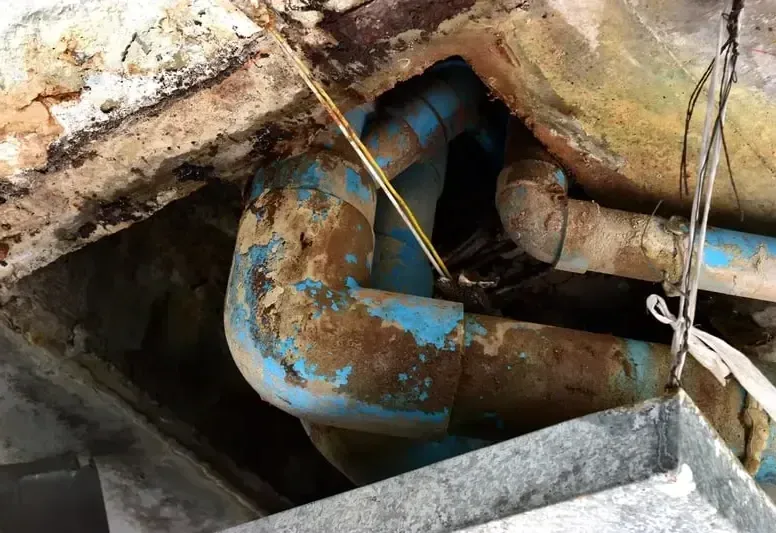
The Cherokee County Water and Sewerage Authority, known as CCWSA, says it owns and operates water mains in the public right of way up to and including the water meter. Past the meter, the pipe to the house and everything inside it are not the Authority's responsibility, which makes it important to know where a leak is.
Key takeaways
- CCWSA says it owns and operates water mains up to and including the meter.
- It says it is not responsible for the service pipe between the meter and the home, for private plumbing, or for leaks inside a home or business.
- A meter test can reveal a leak: write down the reading with no water in use and the icemaker off, wait 2 hours, and read the meter again. Any change may mean a leak.
- A leak inside the house needs a plumber for the pipe and a drying team for the water.
- Photos, readings and invoices keep an insurance claim moving.
Where the Authority's responsibility ends
CCWSA is the county water and sewerage authority for Cherokee County. It says it owns and operates water mains in the public right of way up to and including the water meter.
Beyond that point, it says it is not responsible for the service pipe between the meter and the home, or for private plumbing. It also says it is not responsible for leaks between the meter and the building, or inside a home or business.
Woodstock counted 15,010 housing units at the 2020 census, so the question of where the Authority's part ends and the household's begins comes up often.
The practical effect is simple: the Authority handles the main, and the household handles everything past the meter.
The meter test CCWSA suggests
The test takes patience and a pencil. CCWSA suggests it as a way to find out whether water is moving when nothing is in use.
The test works best at a quiet time, when no one is using water and no appliance is running a cycle. Washers, dishwashers and automatic irrigation can start on their own, so they are checked first.
- Turn off every faucet and appliance, and turn off the icemaker
- Write down the meter reading
- Wait 2 hours without using any water
- Read the meter again and compare the numbers
- Any change in the reading may mean a leak
Working out which side of the house the leak is on
A changed meter reading says water is moving, but not where. The location decides who fixes what and how soon the house is at risk.
Between the meter and the house
A leak in the service pipe runs underground and shows up outdoors. A soggy patch of yard, a spot that stays green when the rest is dry, or the sound of running water can be clues.
A plumber repairs this part. If the water has also reached the foundation or a lower level, the drying team steps in after the pipe is fixed.
Inside the house
An inside leak shows as stains, damp baseboards, peeling paint or a musty smell. Closing the main valve and checking whether the meter stops helps confirm the leak is inside.
- A ceiling stain that spreads over several days
- A baseboard or cabinet base that swells
- A floor that feels soft or warm in one spot
- A faint sound of water in a quiet house
- A drop in water pressure at the faucets
- A water bill that climbs with no change in use
When the leak has already hurt the house
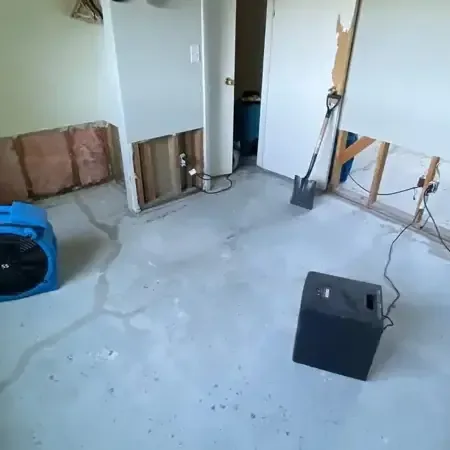
A pipe repair stops the flow, but it does not dry what the water soaked. Walls, insulation, subfloor and flooring stay wet until someone removes the water and dries them.
That is the job of the drying team: water extraction first, then moisture mapping, then equipment placed to work toward dry readings. A hidden supply leak that opened a wall is part of burst pipe water damage work.
Wet materials left in place can start to grow mold within 24 to 48 hours, so extraction does not wait for the pipe repair to finish.
- Standing water is removed from floors and cabinets
- Wet drywall and insulation are cut out
- Studs, subfloor and flooring are dried to readings
- The wall is closed only after the readings hold
Who does what after a leak is found
Several people may be involved, and each has a separate role. Keeping them straight saves time and avoids paying for the same work twice.
A short phone call to each party, with the photos and the meter readings in hand, usually gets the work started in the right order.
- CCWSA: water mains up to and including the meter
- A plumber: the service pipe and the plumbing inside the house
- The drying team: water removal, moisture mapping and drying
- The insurer: the claim, based on photos, readings and invoices
- The homeowner: closing the main valve and keeping records
Older communities and new construction
One 2026 real estate report lists homes sold in the past year with median build years from the 1970s in Kingsridge Estates, Hill Crest and Trickum Hills to 2025 in Havencroft. Those years describe sold homes only.
A leak can happen in a house of any age, so the meter test applies to all of them. The test costs nothing to try and often settles whether the problem is real.
The drying team works to moisture readings, so the age of the house changes the details but not the method.
Rusty water and other false alarms
Not every odd sign is a leak. CCWSA says water left standing in a customer's galvanized service pipe or internal plumbing can dissolve iron and look rusty.
A short pipe leak risk check can help sort out which signs are worth worrying about and which are not.
Questions
Does CCWSA repair a leak between the meter and the house?
CCWSA says it is not responsible for the service pipe between the meter and the home or for private plumbing. A plumber handles that part.
How does the meter test work?
Turn off all water use and the icemaker, write down the meter reading, wait 2 hours and read it again. Any change may mean a leak.
Does the Authority cover leaks inside a house?
No. CCWSA says it is not responsible for leaks inside a home or business.
Can rusty water mean a leak?
Not always. CCWSA says water left standing in a galvanized service pipe or internal plumbing can dissolve iron and look rusty.
What if the meter moves but nothing looks wet?
A changed reading means water is moving somewhere. A leak can hide in a wall, under a floor or underground between the meter and the house, so a plumber and a moisture check can locate it.
How soon should a drying team be brought in after the pipe is fixed?
Right away, and even before the repair is done, since extraction does not need to wait for the plumber. Water that sits can soak into wood and drywall and lead to mold within 24 to 48 hours.