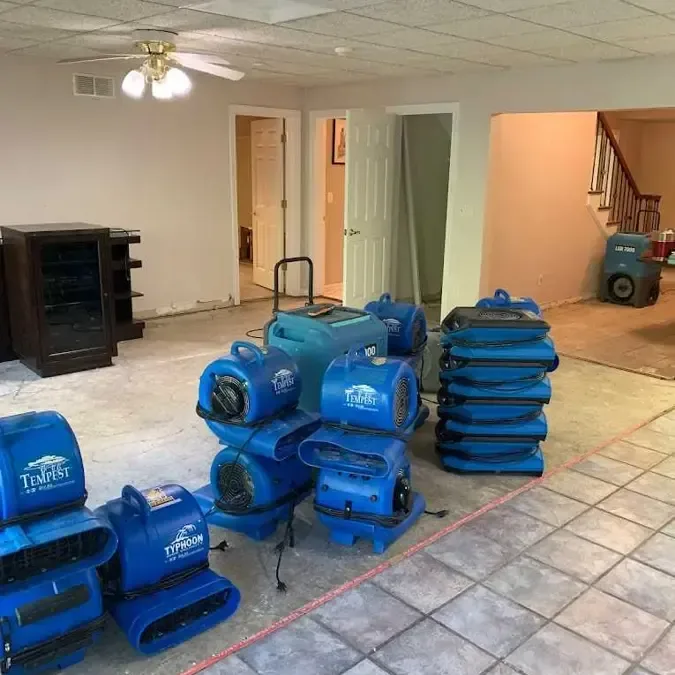
Lower levels pumped and dried

Basement Flooding Cleanup in Roswell, GA

Roswell gets about 52.3 inches of rain a year, and a long soaking rain can push water into a lower level. The drying team pumps it out, removes what is ruined and dries the rest.

(888) 532-4616Water in the lower level? Call now
Each lower level checked on its own Pumped, mapped and dried Readings on slab and framing
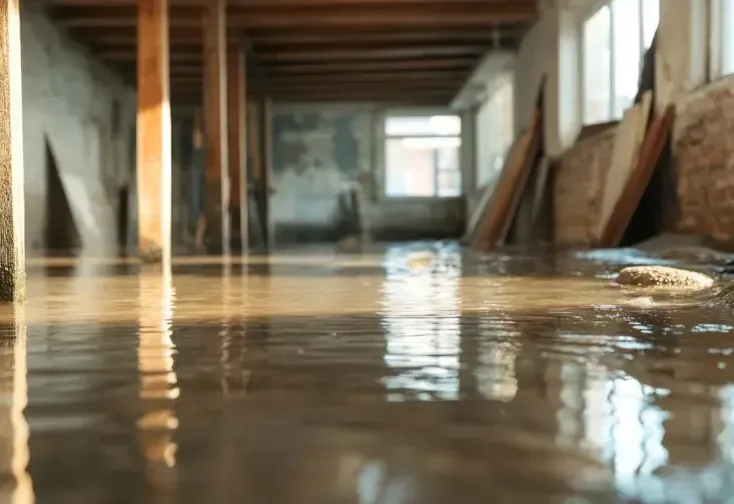
Standing water across an older lower level with brick walls and open joists
Common sourcesRain, seepage, pipes
First jobPump the level down
Slow to dryConcrete and sill plates
Checked byMoisture meters
Right now

First steps for basement flooding cleanup in Roswell

  1. 1

    Keep out of the water

    Standing water near outlets, panels or cords can be live, so leave until power is off.

  2. 2

    Shut the main breaker

    Have the electrical panel turned off before anyone walks into a flooded lower level.

  3. 3

    Move what is dry

    Carry boxes, papers and small furniture up and out of reach of more water.

  4. 4

    Photograph the water level

    Take pictures of the depth on walls and furniture before pumping lowers it.

How the work is held to standard

How basement flooding cleanup is handled in Roswell

Dispatch at any hour

Active water is treated as urgent around the clock, nights, weekends and holidays included, because a split pipe keeps running.

IICRC S500 structural drying

The drying team dries framing, subfloor and concrete, not only the surface, and checks every wet material with meters each day.

A claim-ready file

Moisture maps, daily psychrometric logs and timestamped photos taken before demolition go into the file your insurer reviews.

Basements, crawl spaces, attics

A finished lower level, a dirt crawl space and an attic air handler each dry differently, so the plan starts where the water went.

Typical cost ranges

What does basement flooding cleanup cost in Roswell, GA?

Cost follows how finished the lower level is and where the water came from. An unfinished space starts near $2,500, while finished rooms or sewage and outside water can reach $25,000 or more in a bad case.

Unfinished lower level$2,500 to $6,000
  • Pumped and mopped down
  • Concrete and joists dried
  • Dehumidifiers run for days
Finished lower level$6,000 to $12,000
  • Carpet, pad and trim out
  • Lower drywall cut away
  • Cabinets and built-ins checked
Outside water or sewage$12,000 to $25,000+
  • Contamination contained
  • Porous finishes discarded
  • Sanitized, then fully dried

Ranges are typical, not a quote: the water category, the square footage that got wet, the material class and how fast drying started move the number most. For a closer planning range, run the water damage cost calculator.

The dry-out, milepost by milepost

The basement flooding cleanup process, start to dry

Equipment stays until the readings say dry, not until the room looks dry.

  1. MP 1

    Survey

    Source, depth and contamination are checked first.

  2. MP 2

    Pump

    Water is lowered in steps, then the floor is extracted.

  3. MP 3

    Strip

    Soaked pad, trim and lower drywall come out.

  4. MP 4

    Dry

    Dehumidifiers run until slab and framing read normal.

Getting the water down safely

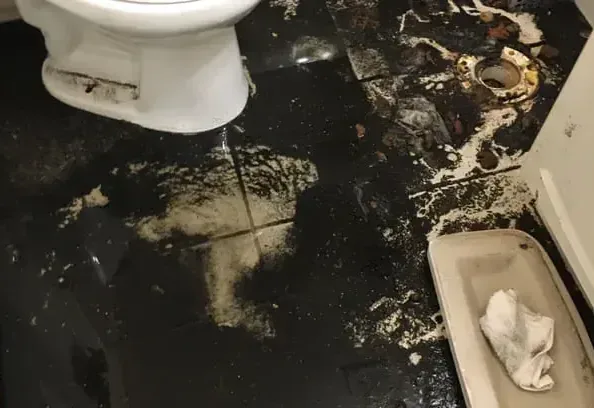
Pumping starts gradually so the pressure outside the walls does not crack a slab or a block wall. Water that came up from the ground or through a drain is treated as contaminated, with protective gear and containment. Clean water from a failed pipe or water heater is simpler, but it still has to be removed quickly.

What gets removed and what gets dried

Carpet pad, baseboards and the bottom of drywall wick water upward and usually come out. Concrete, joists and framing are dried in place, since they cannot be replaced cheaply. Finished lower levels with trim, built-ins and cabinets need extra care because moisture hides behind them.

Dehumidifying the lower level

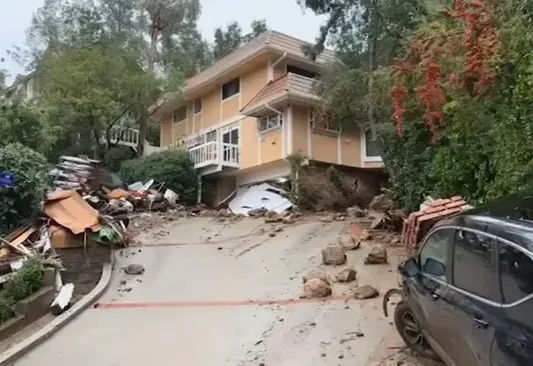
A closed, below-grade room stays humid for a long time, so dehumidifiers do most of the late-stage work. Readings steer the run until the slab and wall bottoms look dry. Structural drying covers that stage, and storm and creek flood cleanup applies when outside water is the source.
Questions

Basement Flooding Cleanup questions in Roswell, GA

Does every Roswell home have a basement?

No, and nobody should assume one. Homes differ, so the crew checks each property for lower levels, crawl spaces and low entries before planning the work.

How fast should a flooded lower level be pumped?

Gradually. Emptying a lower level too fast while the soil outside is saturated can stress a slab or wall, so the level is brought down in steps.

Can a finished lower level be saved?

Often, if the water was clean and the response began early. Flooring and the bottom of drywall usually come out, while framing and concrete are dried in place.

Why does the smell linger after pumping?

Concrete and wood hold moisture long after the standing water is gone. Dehumidifiers and air movers run until readings fall, which clears the damp smell.

Does insurance cover a flooded lower level?

Water from a sudden pipe or appliance failure is commonly covered. Water that enters from outside is usually a flood policy matter, so ask the insurer how the loss is classified.

What are the first things to remove?

Wet rugs, boxes, stored fabrics and anything porous. Moving them out fast cuts the chance of growth and keeps the drying area clear for equipment.

Still not sure what is wet? Water coming up from the floor or in from outside? Describe the level and the crew will explain how pumping and drying would go.

(888) 532-4616Ask about the lower level
Service area

Basement flooding cleanup across Roswell and nearby communities

Roswell, GA service area

The crew handles lower levels across the city, from homes near Old Mill Park and Vickery Creek to East Roswell subdivisions and the Brookfield, Horseshoe Bend and Barrington neighborhoods.

The same service nearby: basement flooding cleanup in Peachtree Corners, Alpharetta, Milton.

Water damage restoration in Roswell · every town covered

Emergency water removal

Lower level flooding?

Soaked pad and drywall keep wicking water upward, so pumping and removal begin before the damage climbs the walls.

(888) 532-4616Pump out the lower level
(888) 532-4616 water still spreading?