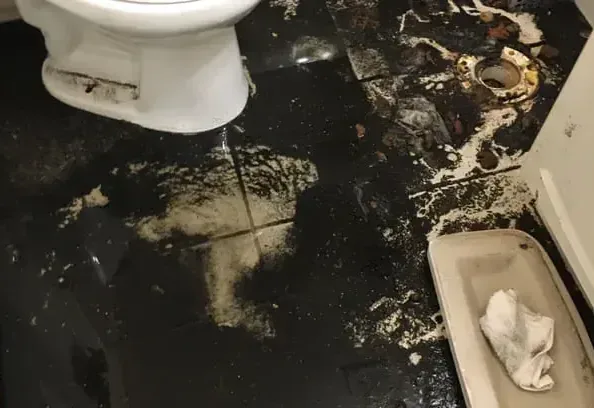
Milton zoning has long favored larger lots suited to septic systems, while Fulton County Public Works provides wastewater service to its customers. After a sewage backup, which of the two a house relies on decides who gets the first report, even though the cleanup inside is handled the same way.
Key takeaways
- Milton zoning has long favored larger, septic dependent lots, and some Fulton County accounts are water only, so the first question is which system serves the house.
- A septic problem points to a septic professional, and a county sewer problem points to the sewer provider. The restoration team handles the inside of the house either way.
- Sewage is contaminated water. Porous materials it touched are removed, and hard surfaces are cleaned, disinfected and dried.
- Stay out of the affected rooms and keep water use down until the cause is found.
- Photos, invoices and cleanup records support an insurance claim, and sewer backup coverage is often a separate add on.
Septic or county sewer: the first question
Much of Milton is zoned agricultural, and that zoning favors large lots, working farms and horse properties over dense subdivisions. Homes on large lots often rely on septic, while Fulton County Public Works provides drinking water and wastewater services to Fulton County customers.
Some Fulton County accounts are water only, with no county sewer service at all. A water bill that shows no sewer charge can be one clue that a house is on septic.
No single answer fits every address, so the answer has to come from the house itself.
The answer matters for speed. A septic backup is a household problem to solve, while a main backup is shared with the street.
- A tank lid or a drain field area in the yard points to septic
- A water bill with no sewer charge can point to a water only account
- Closing papers or permit records from the home purchase usually say which system serves the house
If the home is on county sewer
A blockage in the sewer main can send waste back into the lowest drains of several homes at once. Asking neighbors whether they have the same problem helps tell a main problem from a problem in one house.
If the cause is in the main, the sewer provider should hear about it right away, because the fix is outside the house.
A backup that comes up in a floor drain or a tub at the lowest level of the house is a typical sign that the blockage is downstream of the building.
- Ask neighbors on the same street whether their drains are backing up
- Report the backup to the sewer provider and keep the reference number
- Stop using water in the house, including laundry and dishwashers
If the home is on septic
A septic backup usually means the tank is full, a component has failed or the drain field is saturated. Heavy rain can make a saturated field worse, and the waste has nowhere to go but back up the lowest drains.
A septic professional pumps and inspects the system. The restoration team cleans and dries the house, but it cannot fix the tank.
Pumping a tank without checking the rest of the system can bring the backup right back. That is why the professional's inspection matters as much as the pumping.
- Slow drains in several fixtures at once
- Gurgling sounds in drains and toilets
- A sewage smell in the house or yard
- A wet or unusually green patch above the drain field
What the cleanup treats the same either way
Inside the house, sewage is handled as Category 3 water from the first step, whatever its source. That class sets how the work is done and what is thrown away.
Removing the contaminated water
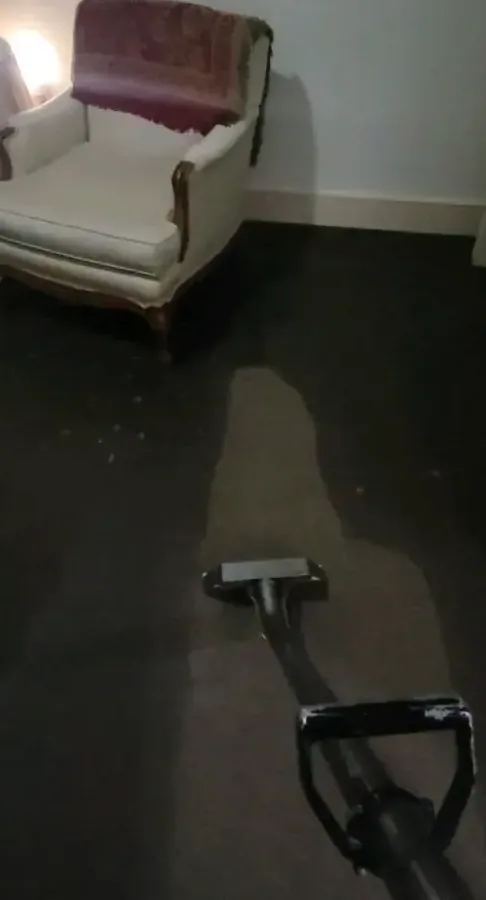
Standing water is pumped and vacuumed off the floor by crews in protective gear. Fast water extraction keeps the contamination from wicking into walls and cabinets.
Carpet, pad and other porous materials that touched sewage are cut out and discarded.
Soft items that cannot be cleaned fully, such as stuffed toys and upholstered furniture, are usually discarded as well.
Cleaning, disinfecting and drying
Hard surfaces are scrubbed and disinfected, and wall cavities are opened where the water wicked upward. Air movers and dehumidifiers then run until moisture readings match a dry reference.
That full sequence is the heart of sewage backup cleanup, and it does not change between septic and county sewer.
- Porous materials: removed
- Hard surfaces: cleaned, disinfected and dried
- Wall cavities: opened, treated and dried to readings
Health and safety until the cleanup is done
Sewage can carry bacteria and viruses, and contact with it is a health risk. The household should avoid the area until trained crews have cleaned it.
The HVAC system should stay off when the backup is near vents or returns, so air does not carry contamination through the house.
- Keep children and pets out of the affected rooms
- Wear boots, gloves and a mask if a quick step is unavoidable
- Do not prepare food in a kitchen near the backup
- Wash hands thoroughly after any contact
- Throw away food and items that touched the water
Insurance, paperwork and who pays
Many homeowner's policies treat sewer backup as an optional add on and not as part of standard coverage. Reading the policy wording or asking the agent before a loss, and again right after one, avoids surprises.
Photographs, the sewer or septic repair invoice, and the cleanup records all belong in the claim file.
- Photograph the backup, the wet rooms and discarded items
- Keep the septic or sewer provider's report and invoice
- Save the moisture readings and equipment logs from the drying team
- Ask the insurer what documents it needs before anything is thrown away
Keeping a backup from happening again
Prevention depends on the system. Septic homes need regular professional care, and homes on county sewer need clear drains and sensible flushing habits.
Records of past service, such as pumping dates and inspection reports, help the next professional find the problem faster.
Local help with the cleanup side is available through Milton sewage and water damage crews.
- Flush only toilet paper and human waste
- Keep grease and wipes out of the drains
- Have a septic system inspected and pumped on the schedule its professional recommends
- Know where the cleanout and the main shutoff are
Questions
Who should be called first after a sewage backup?
The restoration team can begin cleaning the inside right away, since contaminated water should not sit. The sewer provider or a septic professional is called for the cause.
How can a homeowner tell whether the house is on septic?
A tank lid or drain field in the yard, a water bill with no sewer charge, or closing and permit records can show it. Some Fulton County accounts are water only with no county sewer service.
Is the cleanup different for septic and county sewer?
Inside the house, no. Sewage is treated as Category 3 water either way, and the same removal, disinfection and drying steps apply.
What happens to carpet that sewage touched?
Carpet and pad are usually cut out and discarded. Hard flooring is cleaned and disinfected, then dried and checked.
Does homeowner's insurance cover a sewage backup?
It depends on the policy. Sewer backup is often an optional add on, so check the wording or ask the insurer.
Can the drains be used while waiting for the plumber or septic professional?
Water use should stop, because every flush or load of laundry pushes more waste toward the backup. The professional can say whether any short, essential use is safe.