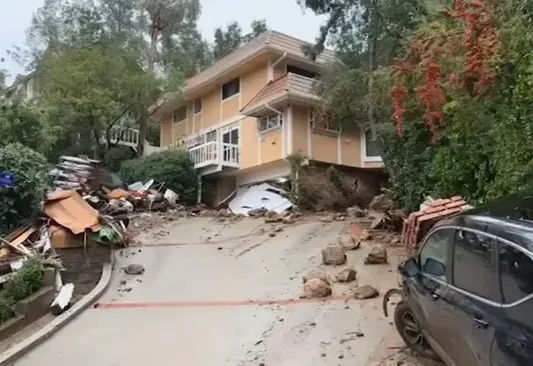
On March 6, 2024, FOX 5 Atlanta posted that heavy rain from Tuesday night into Wednesday morning flooded roads and caught many Roswell drivers in the water. That kind of fast, soaking rain is the pattern that sends water toward garages, lower levels and doors.
Key takeaways
- A fast downpour can flood roads without flooding homes, but the same rain can push water through a garage, a door or a lower level.
- Rain water that enters a house from the ground is treated as contaminated, so soaked porous materials are usually removed.
- Extraction starts first. Walls, floors and contents are then checked with moisture readings.
- Homes close to the Chattahoochee River and Vickery Creek can sit near regulated floodplains, so checking the FEMA Flood Map Service Center by address is advised.
- The area averages about 52.3 inches of rain a year, and March is the wettest month at 6.0 inches.
What the March 2024 rain showed
FOX 5 Atlanta's post was about roads and drivers, and it is a reminder of how fast water collects when a downpour stalls. It is not a record of damaged homes.
The useful lesson is speed. Rain that falls through a night can turn a driveway into a channel before anyone is awake to notice.
For a homeowner, the useful questions are where the water would go and who to bring in. Those are easier to answer on a dry day than in the middle of the night.
How rain water gets inside without a creek flood
Water does not have to rise from a creek to enter a house. Heavy rain finds low openings and weak spots on its own.
Each of these openings is small on its own. Together they let a surprising amount of water into a house during a long, hard rain.
- Garage doors that do not seal at the bottom
- Door thresholds and sliding doors close to the ground
- Window wells that fill and spill over
- Floor drains and lower level walls where ground water pushes in
- Gutters and downspouts that dump water against the foundation
Why storm water counts as contaminated
Storm water crosses yards, driveways and streets before it reaches a house, picking up soil, bacteria and chemicals along the way. That is why it is classed as Category 3, not as clean water.
The class decides what is thrown away. Carpet, pad and soaked drywall are usually removed, while hard surfaces are cleaned, disinfected and dried.
Even a thin layer on a garage floor is treated seriously, because it can wick into drywall, stored boxes and the base of the walls.
What to do when rain water enters
The first moments matter, and they split into what can be done safely and what should wait for trained crews.
In the first moments
Stay out of rooms with standing water until the power to them is off. Move valuables and electronics to higher ground if it can be done safely.
- Photograph the water and the waterline before anything is moved
- Turn off power to wet areas at the panel if the panel is dry
- Keep children and pets out of the water
While waiting for extraction
Do not use household appliances on wet floors. Lifting cushions and rugs off the floor helps them dry and protects them from stains.
- Keep wet shoes and clothes out of the rest of the house
- Do not mix cleaning products while disinfecting small areas
- Wait for readings before putting anything back on a wet floor
How extraction and drying work
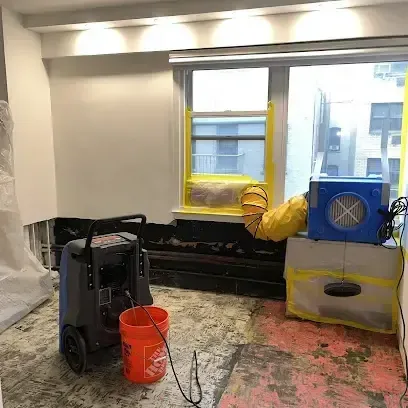
Water comes out first with pumps and wet vacuums. A downpour like the March 2024 rain can push standing water indoors, and fast water extraction limits how far it spreads.
Then the structure is opened and dried. For a flooded garage or a lower level, storm and creek flood cleanup covers removal of mud and wet materials and drying to readings.
Crews check each property rather than assume a basement, and a home with a finished lower level gets basement flooding cleanup added to the plan.
The drying stage can take several days, since wood framing and concrete release water slowly. Readings tell the team when each area is ready to close up.
- Standing water and mud are removed first
- Wet carpet, pad and drywall are cut out where needed
- Air movers and dehumidifiers dry the structure
- Readings are logged until they match a dry reference
Checking the flood map by address
The city's southern boundary follows the Chattahoochee River, and Vickery Creek is part of the local landscape. Homes close to the Chattahoochee River and Vickery Creek, including areas around Riverside Park and Martin's Landing, can sit near regulated floodplains.
The FEMA Flood Map Service Center lets anyone check a specific address. The result is useful to know before the next downpour, and again when talking with an insurer.
The city's water division built rain gardens at Roswell Area Park to catch parking lot runoff and to cut the volume and speed of stormwater that adds to stream bank erosion and flooding. It is a local reminder that heavy rain is a drainage question long before it is an insurance question.
Getting ready for the wet months
The area has a humid subtropical climate with rain spread through the year. January and February each average 4.9 inches, December averages 4.7 inches and March is the wettest month at 6.0 inches.
A short checklist before those months costs little and can save a lot.
- Clear gutters and downspouts, and point them away from the foundation
- Check that garage door seals and door sweeps are intact
- Move stored boxes off the floor in garages and lower levels
- Find the main water valve and the breaker panel
- Save the flood map result and policy details in one place
Questions
Did the March 2024 rain flood Roswell homes?
The FOX 5 Atlanta post said heavy rain flooded roads and caught many Roswell drivers in the water. It did not report on damage to homes.
Is rain water that enters a house clean?
No. Storm water picks up soil and bacteria on its way to a house, so it is treated as contaminated.
What gets thrown away after a storm water loss?
Carpet, pad, soaked insulation and drywall that wicked the water are usually removed. Hard surfaces are cleaned, disinfected and dried.
How can a homeowner check flood risk by address?
The FEMA Flood Map Service Center can be searched by address. Homes near the Chattahoochee River and Vickery Creek can sit near regulated floodplains.
Does a homeowner's policy cover rain water that enters a house?
It depends on how the water entered. Policies often treat rain through a roof differently from water rising from the ground, so check the wording or ask the insurer.
Does the local rain pattern change the cleanup plan?
The area averages about 52.3 inches of rain a year, spread through the seasons, so any month can bring a wet day. The plan stays the same: extraction first, then drying to readings, since wet materials dry slowly without equipment.