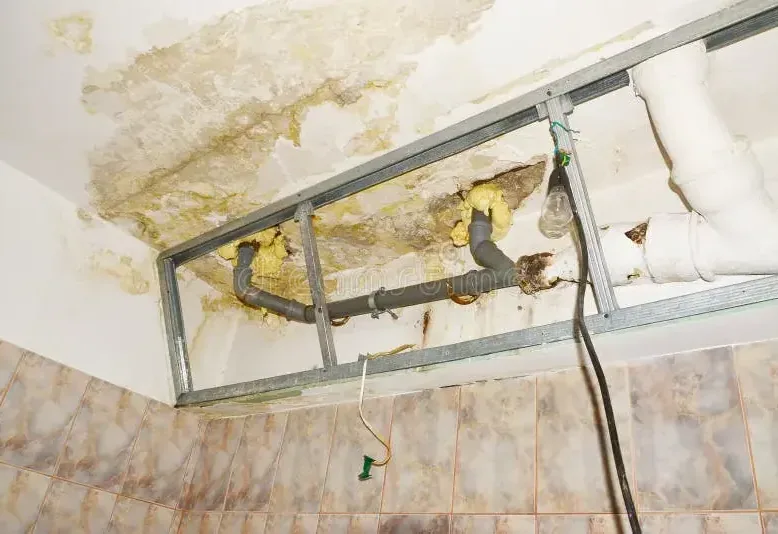
Alpharetta City Center puts 168 apartments, retail, restaurants and offices, City Hall and a Fulton County Library branch in one downtown block. In a building mix like that, water from one unit rarely stays in that unit.
Key takeaways
- In a mixed use block with apartments over shops and offices, one leak can touch several floors and several tenants.
- Closing the unit's shutoff and telling the property manager are the first two moves.
- Ceilings, wall cavities and floors below the source need moisture checks even when they look dry.
- Commercial spaces need their own plan, because ceiling tile, carpet tile and equipment dry differently from apartment finishes.
- Photos, readings and a written timeline protect every tenant and the owner when claims are sorted out.
How water travels through a stacked building
Water goes down before it goes sideways. A leak on an upper floor soaks the floor assembly, drips into the ceiling cavity below and then follows whatever path is easiest.
The block holds 74,000 square feet of retail and restaurants and 36,000 square feet of office, so a leak can reach very different kinds of space from the same source.
Downtown has more than 600 businesses, and Avalon is an 86 acre mixed use development that opened in 2014. The same questions come up wherever homes sit above or beside commercial space.
- Gaps around pipes that pass through a floor
- Wall cavities that run beside plumbing
- Recessed lights, vents and ceiling fixtures
- Cracks along the edge of a floor slab
Where leaks in mixed use buildings start
Most leaks begin with something ordinary that fails at the wrong moment. A fitting loosens, a drain backs up or an overflow drain runs unnoticed.
Knowing the usual sources helps a manager or tenant trace the water faster.
- Washing machines and dishwashers in apartments
- Supply pipes inside walls and above ceilings
- Water heaters in closets and utility rooms
- Condensate drains from air conditioning equipment
- Roof and balcony drains that overflow in heavy rain
First steps in the unit with the leak
Speed matters most at the start, because every minute of flow adds to the number of floors affected. The goal is to stop the source and warn the people below.
If the fixture valve will not close, the unit shutoff or the building shutoff is the next option. That is why the manager hears about it right away.
- Close the shutoff valve at the fixture or appliance, or the unit shutoff if there is one
- Tell the property manager so the building shutoff can be used if the leak will not stop
- Turn off power to wet circuits if the panel can be reached safely
- Knock on the door of the unit below and warn them
- Photograph the source and the wet area before towels cover it
What the unit below and the shops should do
Water dripping from a ceiling is only the visible part. The rest is trapped in drywall, insulation and the wall cavities beside it.
In an apartment below
Move furniture and electronics out of the drip zone and set containers under active drips. A sagging ceiling should be left alone, because it can drop all at once, and the drying team opens it safely.
Photograph the stain now and again each day it changes, because the size of the spread tells the story of how long the water ran.
In a shop, restaurant or office
Cover inventory and equipment, and move paper records away from the affected area. Ceiling tile that is stained or sagging usually has to come out, because it can hold water and release it later.
- Protect computers, servers and point of sale equipment first
- Photograph the stock and fixtures that were wet
- Ask the landlord which parts of the ceiling system belong to the building
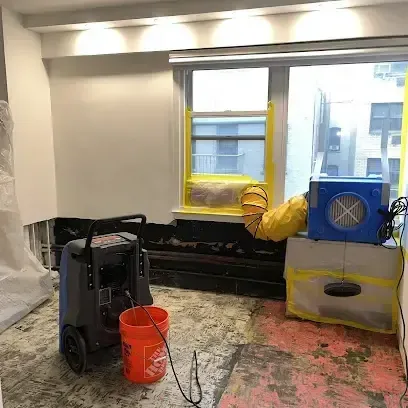
How the drying team maps and dries the damage
Moisture meters and thermal imaging show where the water went, including spaces that look dry. The map sets which ceilings are opened and which walls are dried in place.
For an apartment, the work is a ceiling leak water damage plan: open the wet drywall, dry the joist bay and the wall base, then log readings. For a shop or office, the same steps follow a commercial water damage plan that keeps part of the space usable.
Heavier losses add structural drying across several floors, with equipment placed by zone.
Moisture is measured at the wall base, at the ceiling and in the floor assembly, because water settles in different places depending on the finish. Ceiling cavities in a mixed use building often connect with ducts and chases, which is why a quick look from below is never enough.
- Air movers and dehumidifiers are placed by zone, not by room
- Wet ceiling tile and insulation are removed and replaced
- Readings are taken again each visit until they match a dry reference
Who handles what: owner, tenant and manager
In a building with many users, responsibilities depend on the lease or the governing documents. The unit owner or tenant who caused the leak, the tenant below and the building owner may each carry a different part.
A repair statement from the plumber or appliance technician helps every party. For a water account billed by Fulton County, the county offers account adjustments for leaks that are not routine and not preventable by proper maintenance, after repair, with a Leak Adjustment Request Form and that statement.
Keeping a record that holds up
A claim in a multi tenant building goes faster when the facts are clear. A simple written timeline is often what settles who is responsible for what.
The same approach applies to any water damage restoration in Alpharetta job in a building with shared floors.
- Note when the leak was found and when the water was shut off
- Keep photos of the source, the wet rooms and the damaged items
- Save moisture readings and equipment logs from the drying team
- Keep receipts for repairs and temporary housing or storage
- Send written notice to the manager and to the unit below, and keep a copy
Questions
Who should be told first when an apartment leak starts?
The property manager should be told right away, along with the neighbors below. The manager can use the building shutoff and notify the owner.
Does a ceiling that looks dry still need drying?
Often yes. Water can sit in insulation and wall cavities long after the surface looks normal, so moisture readings decide whether it is dry.
How do shops dry out without closing completely?
The drying team can work in zones, so the wettest area is closed and dried first while the rest of the space stays in use. Equipment is moved as areas reach dry readings.
Can a water bill be adjusted after a leak?
For a water account billed by Fulton County, the county offers adjustments for leaks that are not routine and not preventable by proper maintenance, after repair. The request uses a Leak Adjustment Request Form and a repair statement.
What should be photographed before cleanup starts?
The source of the leak, every wet ceiling, wall and floor, and any damaged belongings or stock. Date the photos if the phone does not.