Following the water path
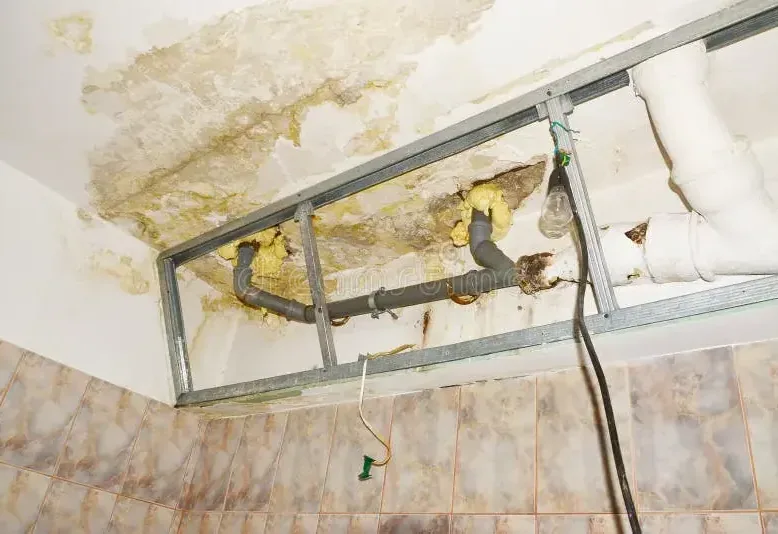
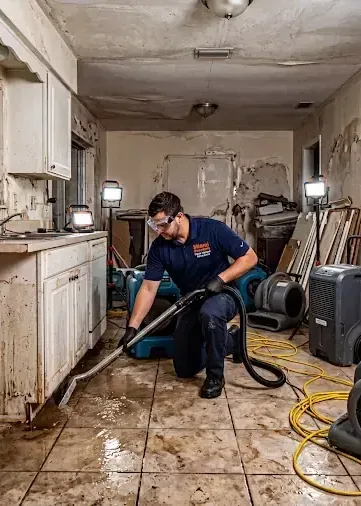
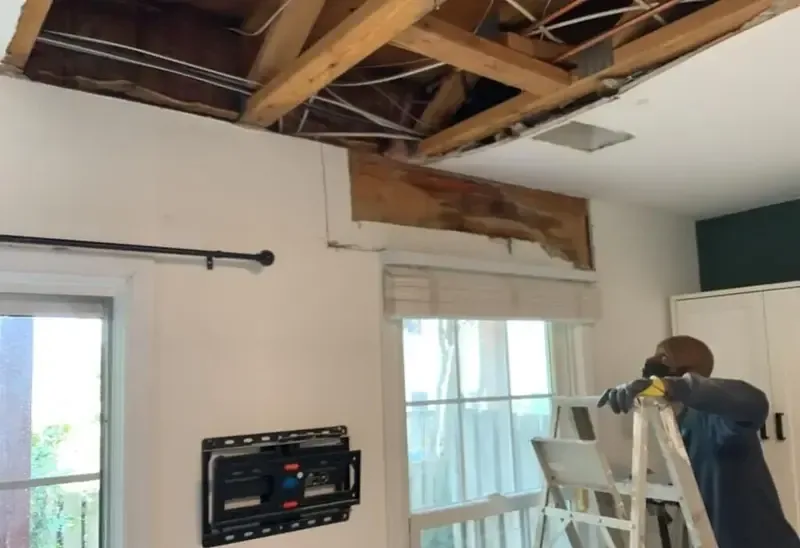
The crew starts at the stain and works outward with a moisture meter and thermal imaging, checking the attic floor, the insulation and the wall tops. Wet insulation is removed, standing water is extracted, and the ceiling is opened where it has absorbed water or begun to sag, which is the same opening work used for a ceiling leak.
Roofer and restorer, in order
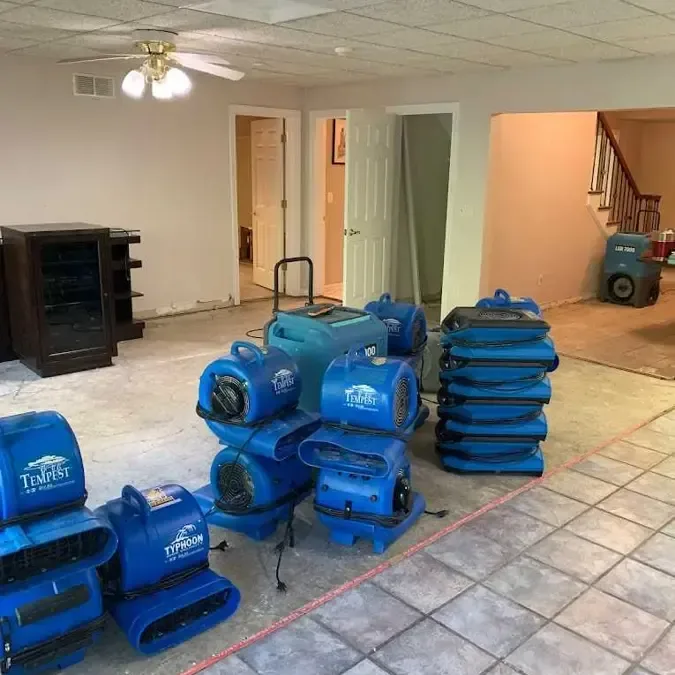
A temporary tarp or a permanent repair stops new water from coming in, and that job belongs to a roofer. Drying should not start in earnest until the roof is sealed, because a drying room under an open roof just fills up again, so structural drying waits for the roofer.
Storm leaks and slow leaks
A storm opening and a slow flashing leak look similar from inside, but the claim is different. Sudden storm damage is often covered, while a leak from wear over time is often not, so the adjuster needs dated photos of the roof, the ceiling and the drying readings.